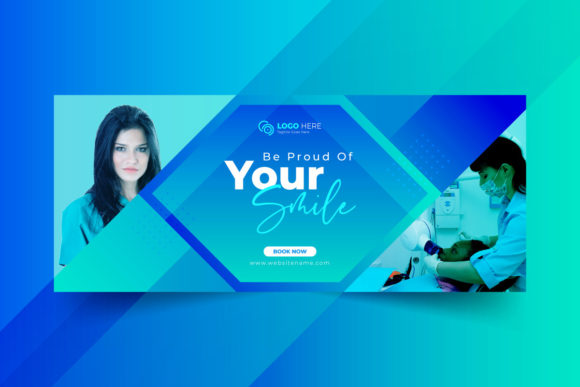
Evaluating the Dental Care Web Banner Design Template for Professional Use
In the competitive landscape of digital marketing for healthcare providers, visual communication often serves as the first point of contact between a practice and a potential patient. A Dental Care Web Banner Design Template offers a structured foundation for creating these critical assets, bridging the gap between professional branding and immediate user engagement. For marketers, small business owners, and freelance designers working within the medical niche, understanding the utility and limitations of such templates is essential for efficient workflow management. This analysis explores the practical application of a standard dental banner template, focusing on its technical specifications, design philosophy, and real-world adaptability.
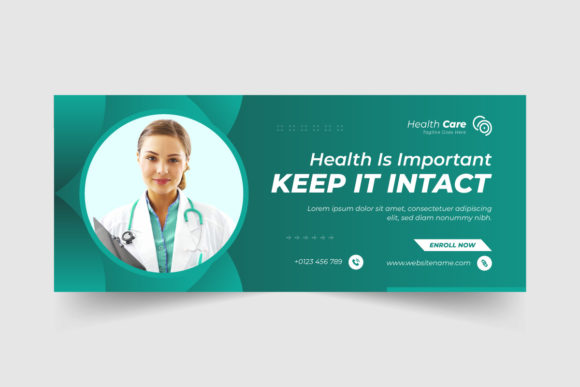
The primary value proposition of a dedicated dental care banner template lies in its ability to standardize visual identity while reducing production time. Unlike generic marketing layouts, a specialized template incorporates industry-specific aesthetics—clean lines, calming color palettes, and imagery placeholders suited for clinical environments. When evaluating a template that boasts features like 300 DPI resolution, RGB color mode, and inclusion of both EPS and JPEG formats, one must look beyond the file types to understand how these elements contribute to campaign success across various digital touchpoints.
Technical Specifications and File Versatility
The technical backbone of any design asset determines its longevity and flexibility. A robust Dental Care Web Banner Design Template typically provides files in multiple formats to accommodate different stages of the design process. The inclusion of an EPS (Encapsulated PostScript) file is particularly significant for professionals who require vector-based editing capabilities. Vector files allow designers to scale graphics infinitely without losing quality, ensuring that logos, icons, and text remain crisp whether the banner is displayed on a mobile device or a large desktop monitor.
Conversely, the JPEG format serves as the ready-to-use raster image, ideal for quick uploads to social media platforms or website headers where immediate deployment is necessary. The specification of 300 DPI (dots per inch) indicates a high-resolution source file. While web displays generally operate at 72 DPI or 96 DPI, starting with a 300 DPI master file ensures that any downsizing for web use retains maximum clarity and detail. Furthermore, the use of RGB Color mode is mandatory for digital applications, ensuring that the colors rendered on screens match the intended brand guidelines accurately, avoiding the dullness that can occur when CMYK print files are converted improperly for web use.
Another critical aspect of usability is the reliance on Free Fonts. In professional workflows, licensing issues can cause significant delays or legal complications. A template that utilizes freely available typography removes this barrier, allowing freelancers and in-house marketing teams to edit and distribute materials without worrying about font acquisition costs or usage rights. This feature alone can make a template more attractive to small business owners who may not have access to extensive type libraries.
Design Philosophy: The Flat Design Advantage
Modern web design has shifted significantly toward minimalism, and the inclusion of a Flat Design file reflects an understanding of current user interface trends. Flat design eliminates unnecessary textures, gradients, and drop shadows, focusing instead on bold colors, simple shapes, and clear typography. For a dental practice, this aesthetic conveys cleanliness, modernity, and transparency—qualities that patients subconsciously associate with hygiene and professional care.
From a functional perspective, flat design elements load faster than complex, layered graphics. In an era where page load speed directly impacts SEO rankings and user retention, a lightweight banner design can contribute to better overall website performance. Moreover, flat designs tend to be more responsive; they adapt more seamlessly to different screen sizes without losing legibility or visual impact. When a Dental Care Web Banner Design Template embraces this style, it ensures that the final output remains effective across the fragmented device ecosystem used by today's consumers.
Customization and Workflow Efficiency
The claim of being 100% customizable and easy to edit is a common marketing phrase, but its practical implication depends on the organization of the source files. A well-structured template will utilize logical layer naming, grouping, and smart objects (in Photoshop) or symbols (in Illustrator). This organization allows a user to swap out placeholder images, modify text, and adjust color schemes with minimal friction. For a busy entrepreneur or a marketing agency managing multiple client accounts, this efficiency translates directly into cost savings and faster turnaround times.
It is important to note that while the template provides the structure, the image is not included. This is a standard practice in stock design resources, as licensing specific photography often requires separate agreements tailored to the user's region and usage scope. However, this also places the onus on the user to source high-quality, relevant imagery that aligns with the template's layout. The effectiveness of the final banner often hinges on this selection process. A generic stock photo of a smiling patient might work, but a candid shot of the actual dental team or the specific clinic interior can significantly boost trust and conversion rates.
Practical Applications for Different Users
The utility of a Dental Care Web Banner Design Template extends to a wide range of users, each with distinct goals:
- Dental Practitioners: Can use these templates to announce new services, promote seasonal discounts on whitening or cleaning, or introduce new staff members without hiring a dedicated designer for every update.
- Marketing Agencies: Benefit from the standardized format to rapidly deploy campaigns for multiple dental clients, ensuring brand consistency while minimizing billable hours spent on layout creation.
- Freelance Designers: Can utilize the template as a starting point to deliver high-quality work to clients quickly, leveraging the pre-built structure to focus on customization and strategy.
- Bloggers and Publishers: Those running health and wellness sites can use these banners to create visually appealing ad spaces or header graphics that maintain a professional tone.
Limitations and Strategic Considerations
While the advantages are clear, potential users must also recognize the limitations. A template, by definition, offers a pre-determined layout. If a brand has very specific, unconventional dimensional requirements or a unique artistic direction that clashes with the "flat" or "clean" aesthetic, the template may require significant alteration, potentially negating the time-saving benefits. Additionally, because these templates are often sold to multiple users, there is a risk of visual similarity with other practices using the same asset. To mitigate this, users should prioritize customizing color palettes to match their exact brand hex codes and sourcing unique photography rather than relying on common stock imagery.
Furthermore, the "easy to edit" claim assumes a baseline level of proficiency with design software. A small business owner with no experience in Adobe Illustrator or Photoshop may still find the learning curve steep, even with free fonts and organized layers. In such cases, the investment in a template should be weighed against the cost of a brief tutorial or the alternative of using simpler, browser-based design tools.
Final Assessment of Value
Ultimately, a Dental Care Web Banner Design Template represents a strategic resource rather than a magic solution. Its value is derived from the balance between professional-grade technical specs—like 300 DPI masters and vector EPS files—and the practical need for speed and consistency in digital marketing. For professionals who understand how to leverage its customizable nature and pair it with authentic imagery, it serves as a powerful tool for enhancing online presence.
The decision to adopt such a template should be based on a clear understanding of your workflow needs and brand identity. If your goal is to maintain a polished, modern appearance across digital channels while optimizing resource allocation, this type of design asset offers a compelling return on investment. By providing a solid structural foundation, it allows creators to focus less on the mechanics of layout and more on the message they wish to convey to their audience.