Mastering the Medical Website User Interface Template
In the fast-paced world of digital healthcare, first impressions are not just about aesthetics; they are about trust. When a patient lands on a clinic's site or a doctor reviews a new telemedicine platform, the interface dictates their comfort level immediately. This is where a robust Medical Website User Interface Template becomes an indispensable asset for designers, developers, and healthcare entrepreneurs alike. It serves as the foundational blueprint for creating digital experiences that are both visually soothing and functionally precise.
Building a medical website from scratch can be a daunting task. You have to balance strict regulatory compliance with the need for a warm, welcoming atmosphere. A high-quality template solves this by offering a pre-structured environment where the heavy lifting of layout logic has already been done. Instead of wrestling with grid systems or worrying about mobile responsiveness, you can focus on content strategy and brand identity. The value proposition here is clear: efficiency without compromising on quality.
The Anatomy of a Professional Medical Design
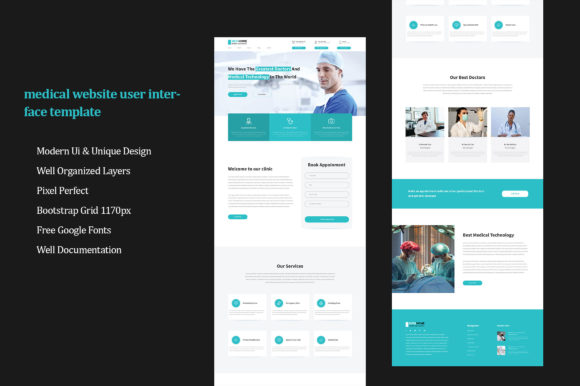
What separates a generic template from a truly effective medical interface? It comes down to organization and clarity. A top-tier Medical Website User Interface Template is built on a solid framework, often utilizing a Bootstrap Grid 1170px system. This ensures that whether a user is viewing the site on a widescreen desktop in a hospital admin office or a smartphone while waiting in a lobby, the content remains accessible and legible.
Beyond the grid, the internal structure of the design files matters immensely to the creator. Professionals appreciate templates that feature well-organized layers. Imagine opening a design file and finding every element neatly grouped, labeled, and layered logically. This "pixel perfect" organization allows for rapid customization. If a clinic needs to swap out color schemes to match their branding or adjust typography using Free Google Fonts, the process is seamless rather than frustrating. This level of detail saves hours of development time and reduces the risk of errors during the handoff from design to code.
Elegant Layouts for Diverse Needs
Versatility is key in the medical sector, which ranges from solo practitioners to large multi-specialty hospitals. A comprehensive template addresses this by including multiple distinct layouts. The Elegant Homepage Layout is usually the crown jewel, designed to guide visitors intuitively toward booking appointments or finding emergency contact information. It balances white space with essential calls to action, avoiding the clutter that often plagues informational sites.
However, the utility extends far beyond the home page. An Awesome Portfolio layout is crucial for showcasing before-and-after cases, particularly in fields like dermatology, dentistry, or plastic surgery. This section requires a specific visual hierarchy to present sensitive imagery professionally. Similarly, a Clear Blog Layout empowers healthcare providers to share expertise, discuss recent studies, or offer wellness tips. In an era where content marketing drives patient acquisition, having a blog structure that prioritizes readability and SEO is a significant advantage.
Real-World Applications Across Industries
The application of a Medical Website User Interface Template stretches across various professional environments. For freelance web designers, these templates are time-savers that allow them to take on more clients without burning out. They provide a reliable starting point that ensures every project meets industry standards for usability and appearance.
For healthcare startups and entrepreneurs launching new apps or services, speed to market is critical. Using a pre-designed interface allows them to validate their business ideas quickly. Instead of spending months on UI design, they can launch a Minimum Viable Product (MVP) that looks polished and professional from day one. This is equally true for educational institutions training the next generation of nurses and doctors; a clean, modern interface makes learning materials more engaging and easier to navigate.
Even marketers and publishers in the health niche benefit from these designs. When running affiliate sites or health blogs, user engagement is the primary metric. A modern UI with unique design elements keeps readers on the page longer, reducing bounce rates and improving conversion metrics. The inclusion of all illustration files in many premium packages further enhances this, providing custom graphics that explain complex medical concepts without the need for expensive stock photography subscriptions.
Enhancing User Experience and Branding
The ultimate goal of any digital interface is to facilitate communication. In medicine, this communication is often between a vulnerable patient and a care provider. A well-executed interface reduces anxiety. Clear navigation, readable fonts, and a logical flow signal competence and care. When users find what they need effortlessly, their trust in the brand deepens.
From a branding perspective, a Modern Ui Unique Design helps a practice stand out in a saturated market. Many medical websites suffer from a "cookie-cutter" look. By leveraging a template that offers unique design quirks and flexible customization options, a clinic can project a personality that aligns with its values—whether that is cutting-edge innovation or compassionate, traditional care.
Practical Considerations for Implementation
While the benefits are substantial, selecting the right template requires a discerning eye. Not all files are created equal. When evaluating a Medical Website User Interface Template, look for Well Documentation. Good documentation acts as a map, guiding you through the folder structure and explaining how to modify specific components. Without it, even the best-designed file can become a headache.
It is also important to note a common limitation in many design resources: Photo Not Included. Most templates use placeholder images to demonstrate layout potential. This means you must be prepared to source your own high-quality imagery. While this adds a step to the workflow, it is actually a benefit. It forces you to use authentic photos of your actual team and facility, which builds far more trust than generic stock photos of smiling doctors shaking hands.
Furthermore, ensure the template supports the technical requirements of your project. If you plan to integrate complex booking systems or patient portals, verify that the Bootstrap Grid and layer structure can accommodate these dynamic elements without breaking the visual flow. The ease of finding folders, layers, and groups cannot be overstated; it directly correlates to how quickly your development team can iterate and deploy updates.
In conclusion, investing in a high-quality interface template is a strategic move for anyone involved in the digital health space. It bridges the gap between creative vision and technical execution. By providing a structured, pixel-perfect foundation, it allows professionals to focus on what truly matters: delivering valuable health information and services to the people who need them most. Whether you are a solo blogger or a large agency, the right tools empower you to build better, faster, and more effective digital experiences.