Special Food Social Media Post: A Menu Design Guide
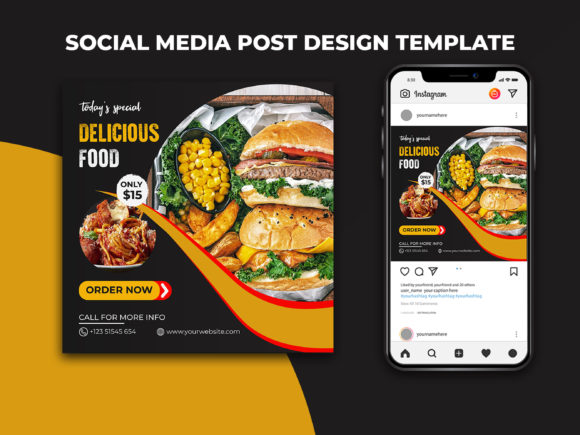
In the competitive landscape of culinary marketing, visual appeal often dictates whether a potential customer stops scrolling or keeps moving. For restaurant owners, food bloggers, and marketing professionals, the pressure to produce high-quality, appetizing content is constant. This is where a Special Food Social Media Post template becomes an invaluable asset. Rather than starting from a blank canvas every time you need to announce a new dish or promote a seasonal menu, leveraging a pre-designed, professional layout allows you to focus on what matters most: the food itself and the story behind it.
This specific design resource is crafted with versatility in mind. It serves as a robust foundation for creating Instagram posts that double as print-ready materials. Whether you are a small business owner looking to maintain brand consistency or a freelance designer seeking to streamline your workflow, understanding the technical and practical advantages of this tool can significantly elevate your output.
Streamlining Workflow with Fully Editable Files
Time is perhaps the most scarce resource for entrepreneurs and creators. The primary advantage of utilizing a Special Food Social Media Post template lies in its fully editable nature. When you access these source files, you are not locked into a rigid structure. Instead, you gain the flexibility to customize every element to align with your specific branding guidelines.
Imagine a scenario where a café needs to update its menu for the autumn season. Without a template, this might involve hours of layout adjustments, font pairing, and image placement. With this design, the process is reduced to swapping out text and images. You can easily modify headings, adjust price points, and rearrange ingredient lists without compromising the overall aesthetic balance. This efficiency allows marketers to react quickly to trends, such as promoting a limited-time offer before the lunch rush begins.
The ability to customize extends beyond simple text changes. Because the files are designed for professional use, layers are typically organized logically. This means you can isolate specific graphical elements, change background colors to match a holiday theme, or alter the opacity of overlays to ensure text readability against vibrant food photography. For freelancers managing multiple clients, this feature ensures that each project feels unique while maintaining a high standard of quality.
Ensuring Professional Quality Across Platforms
One of the most common challenges in digital marketing is maintaining image fidelity across different mediums. A graphic that looks crisp on a smartphone screen may appear pixelated when printed on a flyer or displayed on a high-resolution monitor. This Special Food Social Media Post design addresses that issue by being created at 300 DPI resolution.
Dots Per Inch (DPI) is a critical metric for print quality. While 72 DPI is standard for web-only graphics, 300 DPI is the industry benchmark for professional printing. By starting with a high-resolution file, you ensure that your social media assets can seamlessly transition into physical marketing materials. For instance, a restaurant could use the same design for an Instagram story and a table tent card without needing to recreate the layout. This dual-purpose capability maximizes the return on investment for your design efforts.
Furthermore, the design utilizes the RGB color format, which is optimized for digital displays. Since the primary goal of an Instagram post is to engage users on screens ranging from mobile devices to desktop monitors, RGB ensures that the colors of the food appear vibrant and true to life. The rich reds of a tomato sauce or the golden hues of a pastry are rendered accurately, stimulating appetite and engagement. However, because the file is high-resolution and vector-based, converting to CMYK for print purposes, if ever needed, can be done with minimal loss of quality, provided the original images used are also of sufficient resolution.
Leveraging Adobe CC and Free Fonts for Accessibility
Accessibility and compatibility are key considerations when selecting design resources. This template is built using Adobe CC applications, such as Photoshop or Illustrator. For professionals already embedded in the Adobe ecosystem, this means immediate integration into their existing workflow. There is no learning curve associated with unfamiliar software; you can open the file and begin editing within minutes.
A significant barrier for many small business owners is the cost and complexity of licensing fonts. This design mitigates that hurdle by incorporating free fonts. This feature is particularly beneficial for hobbyists, educators, and startups operating on tight budgets. You do not need to worry about purchasing expensive typeface licenses or dealing with legal compliance issues regarding font usage. The typography has been selected not only for its availability but also for its readability and stylistic appropriateness for food-related content. The fonts likely strike a balance between modern cleanliness and culinary warmth, ensuring that the menu items are easy to read at a glance.
It is important to note, however, that while the design framework is comprehensive, note image not included. This is a standard practice in template distribution to respect copyright laws regarding photography. The user is expected to provide their own high-quality food photography. This requirement actually serves as a benefit, as it forces the brand to use original imagery that truly represents their specific offerings. Stock photos can sometimes feel generic; by inserting your own photos into this professional layout, you create an authentic connection with your audience.
Who Benefits Most from This Design Resource?
The utility of a Special Food Social Media Post extends to a wide range of users, but certain groups will find exceptional value in its features.
- Small Business Owners: For restaurant and café owners who wear many hats, this template offers a way to maintain a professional social media presence without hiring a full-time graphic designer. The ease of editing allows them to keep their audience informed about daily specials efficiently.
- Freelance Designers: Designers can use this as a base to speed up client projects. By starting with a solid 300 DPI structure, they can focus on customization and strategy rather than foundational layout work, allowing them to take on more clients.
- Food Bloggers and Influencers: Content creators who collaborate with brands need polished visuals to maintain their credibility. This design provides a sleek backdrop for showcasing recipes or restaurant reviews, enhancing the perceived value of their content.
- Marketing Agencies: Agencies managing multiple food and beverage accounts can standardize their output. Using a consistent, high-quality template ensures that all client communications meet a uniform standard of excellence.
Practical Considerations and Limitations
While the benefits are substantial, it is essential to approach this resource with a clear understanding of its scope. As mentioned, the absence of included images means the final result is heavily dependent on the quality of the photography you supply. A poorly lit or low-resolution photo inserted into a high-quality template will still look unprofessional. Therefore, investing time in capturing or sourcing excellent food imagery is a prerequisite for success.
Additionally, while the file is editable, some users may find the Adobe CC interface intimidating if they have no prior design experience. In such cases, a brief tutorial on navigating layers and text tools in Photoshop or Illustrator may be necessary. However, the use of free fonts and logical file structures helps minimize this learning curve.
Another consideration is the color format. Since the file is in RGB, it is primarily optimized for digital use. If your strategy involves heavy printing on offset presses, you may need to perform a color conversion check to ensure specific brand colors remain accurate in CMYK. For most social-first strategies with occasional light printing, the provided RGB 300 DPI file is more than sufficient.
Making the Most of Your Design Assets
To truly leverage the potential of this Special Food Social Media Post, consider integrating it into a broader content strategy. Use the template to create a series of posts that tell a story over time. For example, launch a new menu item with a teaser post, follow up with the full menu graphic, and then share customer testimonials using the same visual style. Consistency breeds recognition, and over time, your audience will associate this specific look and feel with your brand's quality.
Furthermore, do not limit the design to Instagram. The high-resolution nature of the file makes it suitable for Facebook covers, Pinterest pins, or even digital signage within your establishment. The versatility of the vector files ensures that scaling the design up or down does not degrade the sharpness of lines or text.
In conclusion, adopting a professional template like this is not just about saving time; it is about elevating the standard of your visual communication. By combining technical precision with creative flexibility, you empower yourself to present your culinary creations in the best possible light. Whether you are a seasoned marketer or a passionate foodie sharing your latest discovery, this tool provides the structural support needed to make your content stand out in a crowded digital feed.